NBA Back-to-Back Games Betting: What Fatigue Data Tells Punters
 Available in US
The Back-to-Back Problem in Modern NBA Scheduling
Three seasons ago I started tracking every back-to-back game on the NBA schedule with a coloured marker in my spreadsheet. Red for road back-to-backs, amber for home second nights, green for the opponent facing a fatigued team. By mid-January, the spreadsheet looked like a traffic light — and the patterns in it changed how I price fatigue permanently.
The NBA has reduced back-to-backs in recent years, but they haven’t disappeared. Each team still plays somewhere between 12 and 15 of them per season, and the league compresses the schedule further in Olympic and World Cup years. The 82-game season squeezed into roughly 170 days guarantees that scheduling mismatches will exist — and those mismatches are among the most data-rich angles in basketball betting.
Recovery science is unambiguous on the timeline: NBA-level athletes need 48 to 72 hours to fully replenish glycogen stores after a high-intensity game. A back-to-back gives them roughly 20 hours between the final buzzer of game one and tip-off of game two — less than half the minimum recovery window. That’s not a marginal deficit. It’s a physiological reality that shows up in every measurable performance metric, from shooting percentages to defensive positioning.
What García et al. and Recovery Science Show
Most NBA betting content mentions fatigue in passing — “teams on back-to-backs tend to underperform” — without citing any actual research. I find that frustrating, because the academic literature is both specific and actionable if you know where to look.
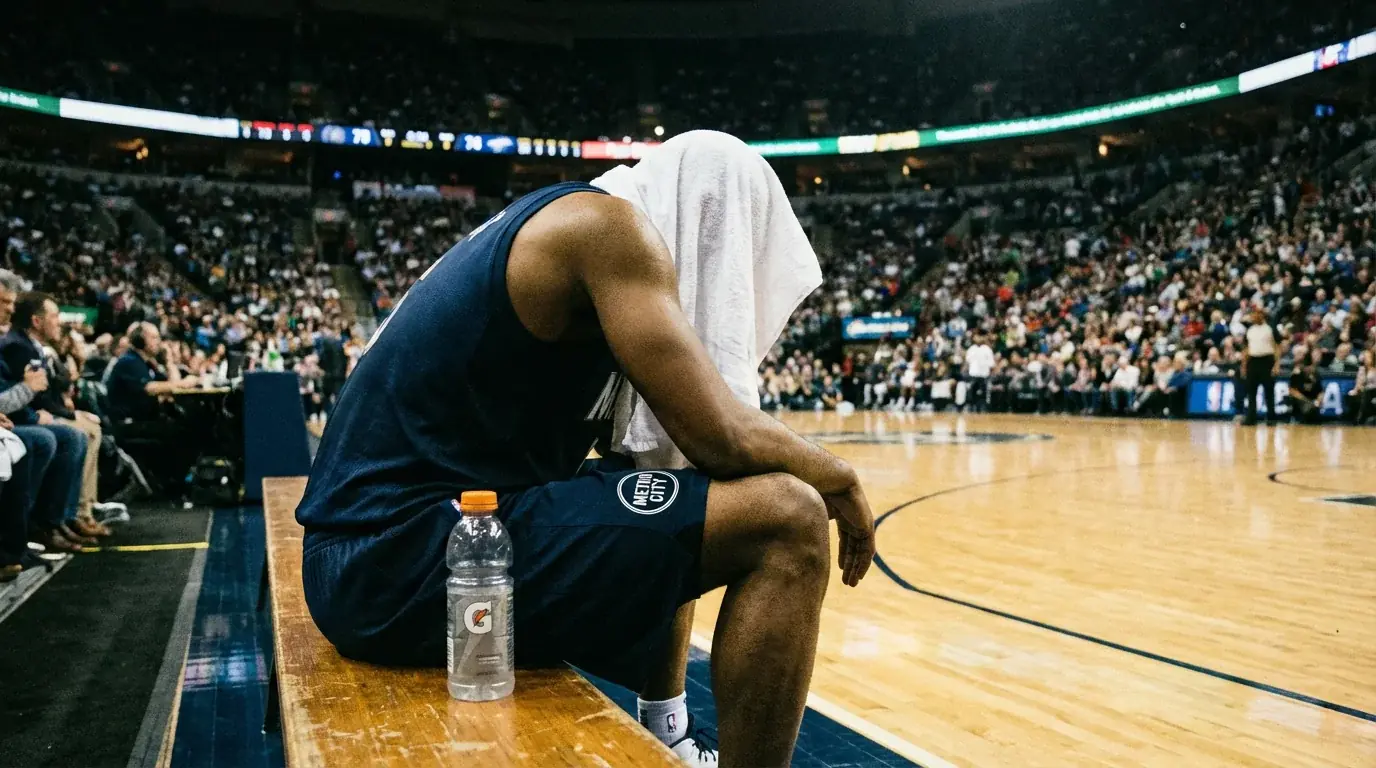
García and colleagues published a study measuring physical performance decline across NBA game quarters. The effect size they found was -1.27 between the first and fourth quarters — a large and statistically significant drop in output as the game progresses. That decline isn’t just about one game; it compounds when players haven’t recovered from the previous night’s effort. On the second night of a back-to-back, players start the game closer to the fatigue level they’d normally reach in the fourth quarter of a fully rested game.
What does that look like in practice? Slower rotations on defence. Heavier legs on close-outs. A three-point shooting percentage that drops because fatigued legs mean shorter shots that brick off the front rim. None of these things show up in a pregame headline, but they all show up in the final score — and, more importantly, in the margin relative to the spread.
The glycogen research adds another dimension. Full replenishment takes 48 to 72 hours with proper nutrition and rest. On a back-to-back, players get neither adequate sleep nor optimal recovery nutrition, especially on road trips where meal timing and hotel beds are suboptimal. The cumulative effect is a team that looks like itself on the stat sheet but is operating at 85-90% of its peak capacity. That 10-15% matters enormously against the spread, where most games are decided by a handful of possessions.
How Tired Teams Perform Against the Spread
Here’s where theory meets betting reality. I’ve tracked ATS records for back-to-back teams across the last four seasons, and the data tells a consistent story — but it’s not the one-dimensional narrative most tipsters sell.
Teams on the second night of a back-to-back do underperform against the spread on aggregate. That’s the headline number, and it’s accurate. But the aggregate masks important variation. Home teams on the second night cover at a rate that’s only slightly below the overall average — the home-court advantage partially offsets the fatigue penalty. Road teams on the second night, however, cover at a rate meaningfully below 50%, especially when the travel distance between games exceeds a single time zone.
The market knows this. Bookmakers adjust for back-to-backs, and the adjustment has become more aggressive over the last three seasons as the angle gained popularity. A spread that might have underpriced fatigue by two points in 2021 now typically underprices it by half a point or less. The edge hasn’t disappeared, but it’s thinner — and it requires you to layer additional factors on top of the raw back-to-back status.
Those additional factors include: minutes distribution from the previous game (did the starters play 38 minutes or 28 in a blowout?), the quality of the opponent tonight relative to the opponent last night, and whether the team is travelling east-to-west or west-to-east. A team that blew out its opponent by twenty points yesterday, sat its starters in the fourth quarter, and is now playing at home on the second night is a very different back-to-back proposition than a team that went to overtime on the road and flew across two time zones overnight.
Road Back-to-Backs: The Sharpest Angle
If I had to isolate a single scheduling angle that’s produced the most consistent results in my nine years of NBA betting, it would be fading road teams on the second night of a back-to-back against rested opponents. Not every instance — I’m not a system bettor — but the subset where the fatigued road team also played heavy minutes the night before and faces a top-ten defensive team tonight.
The compounding of disadvantages is what makes this angle work. Road means no home crowd, unfamiliar arena, hotel sleep. Second night means physiological depletion. Heavy minutes means the players who matter most are the most fatigued. Top-ten defensive opponent means the opposing team is capable of exploiting every marginal deficit — slower rotations, weaker close-outs, less explosive drives to the basket.
When all four factors align, the spread rarely captures the full disadvantage. I’ve found that the bookmaker adjusts for the obvious back-to-back discount but often underweights the minutes-and-opponent combination. That’s where the value sits — not in blindly betting against every back-to-back team, but in waiting for the specific cluster of conditions that historical data says produces the largest performance drop.
Patience is the non-negotiable here. These spots don’t appear every night. Some weeks they appear three times; other weeks, zero. The punter who waits for the right configuration and bets with conviction will outperform the one who forces the angle on every back-to-back because the spreadsheet said “bet against tired teams.” The data gives you direction. Your job is to apply context and discipline — the same data-driven approach that governs every other NBA betting decision — before pulling the trigger.
How do back-to-back games affect NBA betting?
Teams playing the second night of a back-to-back operate on depleted recovery — 48-to-72-hour glycogen replenishment compressed into roughly 20 hours. This leads to measurable declines in shooting accuracy, defensive effort, and fourth-quarter performance. Against the spread, road back-to-back teams underperform most consistently, though the market has priced in much of the raw edge in recent seasons.
Do NBA teams rest star players on the second night of back-to-backs?
Increasingly, yes — particularly in the regular season and especially after the All-Star break. Star rest decisions often drop late, sometimes within an hour of tip-off, which can cause significant line movement. Monitoring the official NBA injury report at both the afternoon and 90-minute-pre-tip windows is essential for identifying these situations before the market fully adjusts.
Created by the ”nba Games Betting” editorial team.