NBA Live Betting: In-Play Strategy and Timing for UK Punters
 Available in US
Table of Contents
- What Makes NBA the Premier Live Betting Sport
- How In-Play NBA Markets Open, Move, and Close
- Quarter-by-Quarter Scoring Patterns and Value Windows
- Reading Momentum Shifts for Live Bet Timing
- Timeout and Commercial-Break Betting Opportunities
- The Discipline Problem: Why Live Betting Needs Limits
- Which UK Bookmakers Offer the Best Live NBA Coverage
- Frequently Asked Questions
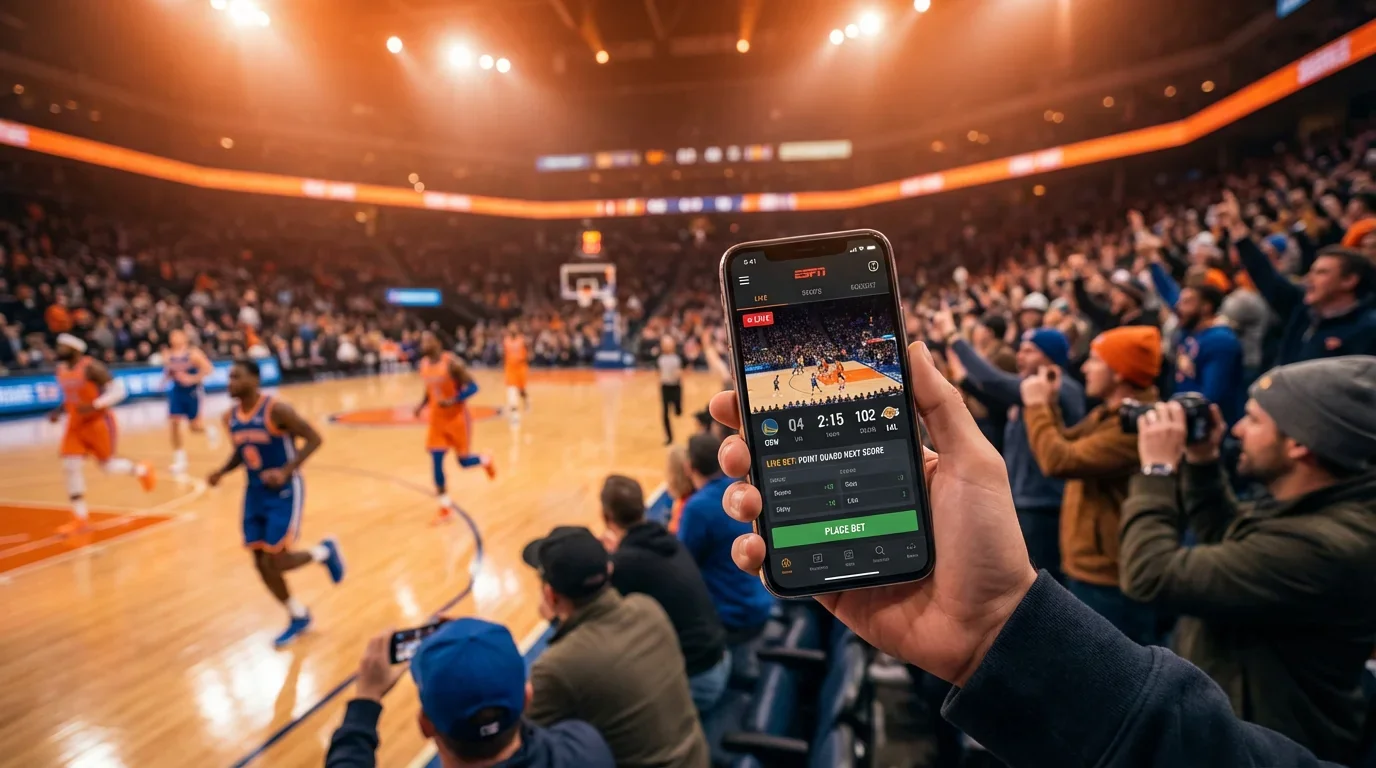
What Makes NBA the Premier Live Betting Sport
I placed my first live NBA bet at 1:47 in the morning from my flat in East London. A timeout had just been called, the spread had swung three points in ninety seconds, and I had about twelve seconds to decide whether the shift was signal or noise. I got it wrong that night. But the adrenaline — the raw speed of in-play basketball wagering — hooked me in a way that pre-match betting never had.
The NBA is built for live betting in ways that other sports simply are not. The game produces a natural rhythm of scoring, stoppages, and momentum shifts that creates constant repricing opportunities. Football can go 45 minutes without a goal. Cricket can spend an entire session in stalemate. Basketball generates points on nearly every possession, with the average NBA game producing somewhere between 200 and 230 total points across 96 possessions per team. That scoring density means the live odds update continuously, offering dozens of decision points in every quarter.
The numbers reflect this. UK punters place 290 million online bets on real-world events every month, and in-play markets claim a growing share of that volume. Basketball is disproportionately popular in the live segment because the sport’s pace aligns perfectly with the bettor’s desire for action and resolution. A live spread bet placed in the second quarter will typically resolve within 30 minutes. Compare that to a live football bet that might take 60 minutes to settle, or a cricket bet that could take the better part of a day.
For UK punters specifically, the late-night tip-off times (23:00 to 03:30 GMT) create an oddly favourable environment for live betting. The casual crowds have gone to bed. The bookmakers’ trading desks are running leaner overnight crews. And the bettors still awake tend to be more engaged and attentive. That reduced volume can make live lines slightly less efficient during the early hours — a window I have exploited consistently over the years.
There is a structural reason why the NBA is uniquely suited to in-play wagering beyond raw scoring frequency. The sport’s timeout structure, substitution patterns, and quarter breaks create natural pauses that allow the bettor to process information. Tennis offers continuous play with few breaks for reflection. Football’s halftime is a single long pause. Basketball gives you dozens of short windows — each one an opportunity to recalibrate your position without the pressure of a ticking clock. Those windows are where live betting transforms from gambling into analysis.
How In-Play NBA Markets Open, Move, and Close
The mechanics of live NBA betting are straightforward in theory and chaotic in practice. Understanding both sides of that coin is essential before you start placing bets during a game.
Live markets for an NBA game typically open a few minutes before tip-off and remain active throughout the game, with brief suspensions during dead-ball situations. When the ball is in play, odds are updating in real time — often every two to three seconds — based on a combination of the current score, time remaining, team strength models, and in-game momentum algorithms. Most UK bookmakers use odds feeds from third-party providers who run sophisticated models that ingest play-by-play data and adjust probabilities instantaneously.
The key markets available live mirror the pre-match menu: moneyline (match winner), spread, and total points. Some bookmakers also offer live player props, next team to score, and quarter-specific markets. The spread is the most actively traded live market, and it moves in a distinctive pattern. After a scoring run by one team, the live spread overreacts in the short term — a 7-0 run might shift the spread by 2 to 3 points, even though a 7-0 run in basketball is ordinary and often corrected within the next few minutes. Experienced live bettors look for these overreactions and bet against them, a strategy known as “fading the run.”
Markets suspend during timeouts, free throws, and reviews. These pauses last 60 to 120 seconds and represent the windows where you can think clearly, evaluate the situation, and decide whether to act. The frantic seconds of live play are not the time to place bets — the odds are moving too fast and the risk of stale pricing is too high. The pauses are your workspace. I discipline myself to only place live bets during stoppages, never during active play. That single rule has saved me from countless impulsive mistakes.
Live markets typically close with approximately 60 to 90 seconds remaining in the fourth quarter if the game is within reach, though some bookmakers keep certain markets open until the final buzzer. The closing minutes of a close game produce the wildest odds swings of the entire match, and the temptation to chase is at its peak. I will address that temptation — and why it is dangerous — in the discipline section below.
Quarter-by-Quarter Scoring Patterns and Value Windows
Not all quarters are created equal, and understanding how scoring distributes across a game is the single most valuable piece of knowledge a live NBA bettor can possess.
First quarters tend to be the most unpredictable. Teams are finding their rhythm, rotations are fresh, and the variance in early shooting can produce misleading score differentials. A team that starts 2-for-12 from three-point range in the first quarter is not suddenly a bad shooting team — they are experiencing normal variance that will likely correct over the remaining 36 minutes. Live spreads after the first quarter often overweight what just happened and underweight what is likely to happen next. That gap is where value lives.
Research analysing 2,295 NBA games across ten seasons found that only 19% of games remained within 10 points entering the fourth quarter. That means the vast majority of games have established a clear trajectory by the midpoint of the third quarter. For live bettors, this creates two distinct value windows. The first is the end of the first quarter into the beginning of the second, when early variance is still distorting the line. The second is the late third quarter, when blowouts become apparent and the live spread stretches to reflect a margin the trailing team is unlikely to close.
The physical dimension reinforces these patterns. Player performance declines measurably as the game progresses, with García and colleagues documenting an effect size of -1.27 between first-quarter and fourth-quarter output. That decline is not evenly distributed among players — stars with superior conditioning maintain their level better than role players — but the aggregate effect means that fourth-quarter scoring rates tend to dip compared to the first three periods. If you are betting live totals in the fourth quarter, account for this decline rather than extrapolating from the pace of the first three quarters.
I have found the most consistent live value in second-quarter unders when the first quarter has been unusually high-scoring. Regression to the mean is a powerful force in basketball, and a first quarter with 65 combined points is far more likely to be followed by a second quarter with 50 than another 65. The live total adjusts after a high-scoring first quarter, but in my experience, it does not adjust far enough. This is an angle I revisit every season, and it has been positive in seven of the last nine.
Reading Momentum Shifts for Live Bet Timing
The word “momentum” gets thrown around loosely in sports commentary. In live betting, it needs to mean something specific, or it is worse than useless — it is expensive.
I define momentum in live NBA betting as a sustained change in scoring rate that is supported by a tactical cause. A 10-2 run caused by a defensive adjustment — say, switching from man-to-man to a zone that the opposing team is struggling against — is genuine momentum. A 10-2 run caused by three consecutive contested three-pointers falling in is not momentum; it is variance. The distinction matters because the first scenario is likely to persist (the defensive adjustment will keep working until the opponent adapts), while the second is likely to revert (contested threes do not fall at 100% for long).
The practical signals I watch for during live games are substitution patterns, defensive scheme changes, and foul trouble. When a team’s best perimeter defender picks up his third foul early in the second quarter and goes to the bench, the opposing guard’s scoring rate is likely to spike. That is a momentum shift with a clear cause, and the live spread may not adjust quickly enough. Conversely, when a star player returns from the bench after resting for four minutes and his team immediately launches a run, the live line often overreacts because the model overweights the star’s presence without accounting for the fact that the opposing team’s starters are also returning.
Timeouts are the reset button for momentum. A well-timed timeout by a trailing team disrupts a scoring run and gives the coach a chance to adjust. I treat timeouts as momentum neutralisers: if a team has been on a run and the opponent calls timeout, the run is more likely to end than continue. Betting into the run after a timeout has been called is one of the most common live betting mistakes I see. The timeout exists precisely to stop what just happened. Respect that.
One pattern I track religiously: the first two minutes after halftime. Teams make halftime adjustments, and the early third quarter reveals whether those adjustments are working. If a team that trailed by 8 at halftime comes out and scores on their first three possessions, the halftime adjustment is working, and the live spread may be slow to reflect the new dynamic. That two-minute window after halftime is one of the most actionable in live NBA betting.
The inverse is equally telling. A team that led comfortably at halftime and then allows the opponent to cut the deficit to 3 within the first four minutes of the third quarter is in trouble — not because of the score, but because the halftime adjustment has failed and the coaching staff is now scrambling. Live spreads in this scenario tend to remain anchored to the halftime margin longer than they should, creating an opportunity to back the team with the momentum at a spread that has not caught up to the shift.
Timeout and Commercial-Break Betting Opportunities
Every NBA game has a structured set of mandatory timeouts tied to television broadcast windows. These are not optional — the league requires them at specific intervals, and they create predictable pauses of 90 to 150 seconds during which live markets remain open but odds stabilise. For a live bettor, these pauses are the difference between reacting and analysing.
During a mandatory timeout, you have time to check the box score, review the substitution pattern, assess foul trouble, and evaluate whether the current live spread reflects the state of the game as you see it. I use these breaks to run a mental checklist: which lineup is each team likely to use coming out of the break? Has the pace been faster or slower than the pre-game total suggests? Is either team’s shot distribution skewing unusually toward threes or paint points? These questions take 60 seconds to answer, and the answers inform whether I should be in the market or sitting on my hands.
Coach-called timeouts are different. These are reactive — a coach calls timeout because something is going wrong. The team on the wrong end of a run needs to regroup. Live markets respond to the run that prompted the timeout, but they often fail to price in the adjustment that will follow. I view coach-called timeouts as high-information events: the timeout itself tells you that the coaching staff recognises a problem, and NBA coaches at this level are generally effective at solving short-term tactical issues. Backing the team that called the timeout at the inflated spread is a play I make selectively — only when the run was driven by variance rather than a structural mismatch.
The Discipline Problem: Why Live Betting Needs Limits
I am going to be blunt about something that most betting content glosses over: live NBA betting is the most psychologically dangerous form of sports wagering available to UK punters. The speed, the constant action, and the illusion of control create a feedback loop that can drain a bankroll in a single night.
The data supports this concern. Research into micro sports betting — the rapid-fire, in-play wagering that defines live NBA markets — found that 78% of people engaged in this type of betting show signs of problem gambling. Seventy-eight percent. That number should make every live bettor pause and honestly assess whether their habits are sustainable.
Keith Baker, the NCAA president, captured the essence of the problem when he reflected on how mobile betting transformed the landscape: the phone changed everything, he observed, and nobody anticipated how quickly the entire industry would end up in the palm of your hand. That observation applies doubly to live betting, where the combination of a smartphone screen, real-time odds, and a game you are emotionally invested in creates the conditions for impulsive decision-making.
I set three hard rules for myself when I bet NBA games live. First, I decide my maximum number of live bets before the game starts, and I do not exceed it. For most games, that number is two. Second, I only place live bets during stoppages — never during active play. The few seconds when the ball is live and the odds are flickering are designed to trigger impulsive clicks. I refuse to participate. Third, I set a loss limit for live betting that is separate from my pre-match bankroll. If my live allocation for the night is gone, I close the app and watch the rest of the game purely as a fan.
These rules are not optional for me. They are the reason I am still betting NBA after nine years rather than being another cautionary tale. If live betting is part of your approach, build your guardrails before you place your first in-play wager — not after you have learned why you need them.
Which UK Bookmakers Offer the Best Live NBA Coverage
Not every UK bookmaker treats NBA live betting with the same seriousness. Some offer a full suite of in-play markets — spread, moneyline, totals, quarter bets, and live player props — with odds that update every few seconds. Others provide a skeleton service with limited markets and sluggish updates that make meaningful live betting impossible.
Rather than ranking specific operators (the landscape shifts too frequently, and what matters most depends on your individual priorities), I will outline the features that distinguish a strong live NBA platform from a weak one. Speed of odds update is paramount. If the live spread on your screen is more than five seconds behind the current game state, you are trading on stale information — and the bookmaker is not. The best platforms update within two to three seconds of a scoring play, and they display a visible lag indicator so you know when the odds are fresh.
Market depth matters. A platform that only offers live moneyline and totals is limiting your options. You want access to live spreads at multiple price points (alternative lines), live quarter and half markets, and ideally live player props. The more markets available, the more opportunities you have to find a mispriced number during a game.
Cash-out functionality is another differentiator. Some bookmakers allow you to close a live bet before the game ends, locking in a profit or cutting a loss. The cash-out price is never perfectly fair — the bookmaker takes a margin — but it gives you flexibility that a locked-in bet does not. I use cash-out sparingly and only when the game situation has changed dramatically from my original analysis. It is a risk-management tool, not a profit-maximisation tool.
Finally, verify that any platform you use for live NBA betting holds a valid UK Gambling Commission licence. In-play betting is regulated under the same framework as pre-match wagering, and UKGC-licensed operators must comply with responsible gambling requirements that protect you as a consumer. The complete guide to NBA betting in the UK covers the regulatory landscape in more detail.
One practical consideration unique to live NBA betting from the UK: connection stability. Games tip off late, you are likely on home Wi-Fi, and a dropped connection during a critical moment means a missed bet or — worse — a bet placed at stale odds that you cannot retract. I run live sessions on a wired Ethernet connection rather than Wi-Fi whenever possible, and I keep a mobile data backup ready. It sounds paranoid until the first time your router hiccups during a fourth-quarter swing and your bet goes through at odds that no longer exist.
Frequently Asked Questions
Is live NBA betting profitable long-term?
It can be, but it demands exceptional discipline and a structured approach. The speed of live markets amplifies both edges and mistakes. Profitable live bettors typically specialise in one or two specific angles — such as fading early scoring runs or betting second-quarter unders after high-scoring first quarters — rather than trying to trade every fluctuation. Without pre-set limits on bet count and loss thresholds, the risks outweigh the potential rewards for most punters.
How quickly do NBA live odds update during play?
At the best UK bookmakers, live NBA odds update every two to three seconds during active play. Updates pause briefly during dead-ball situations like timeouts, free throws, and reviews. The speed varies between platforms — some update faster than others — so testing the responsiveness of your chosen bookmaker’s live interface before committing real money is worthwhile.
Can I cash out NBA live bets with UK bookmakers?
Most major UK bookmakers offer a cash-out option on live NBA bets, allowing you to settle the bet early for a price that reflects the current game situation. The cash-out price includes a margin for the bookmaker, so it is never the mathematically ‘fair’ value. Partial cash-out — settling a portion of the bet and leaving the rest active — is available at some operators and provides additional flexibility for managing risk during a game.
Prepared by the nba Games Betting editorial staff.