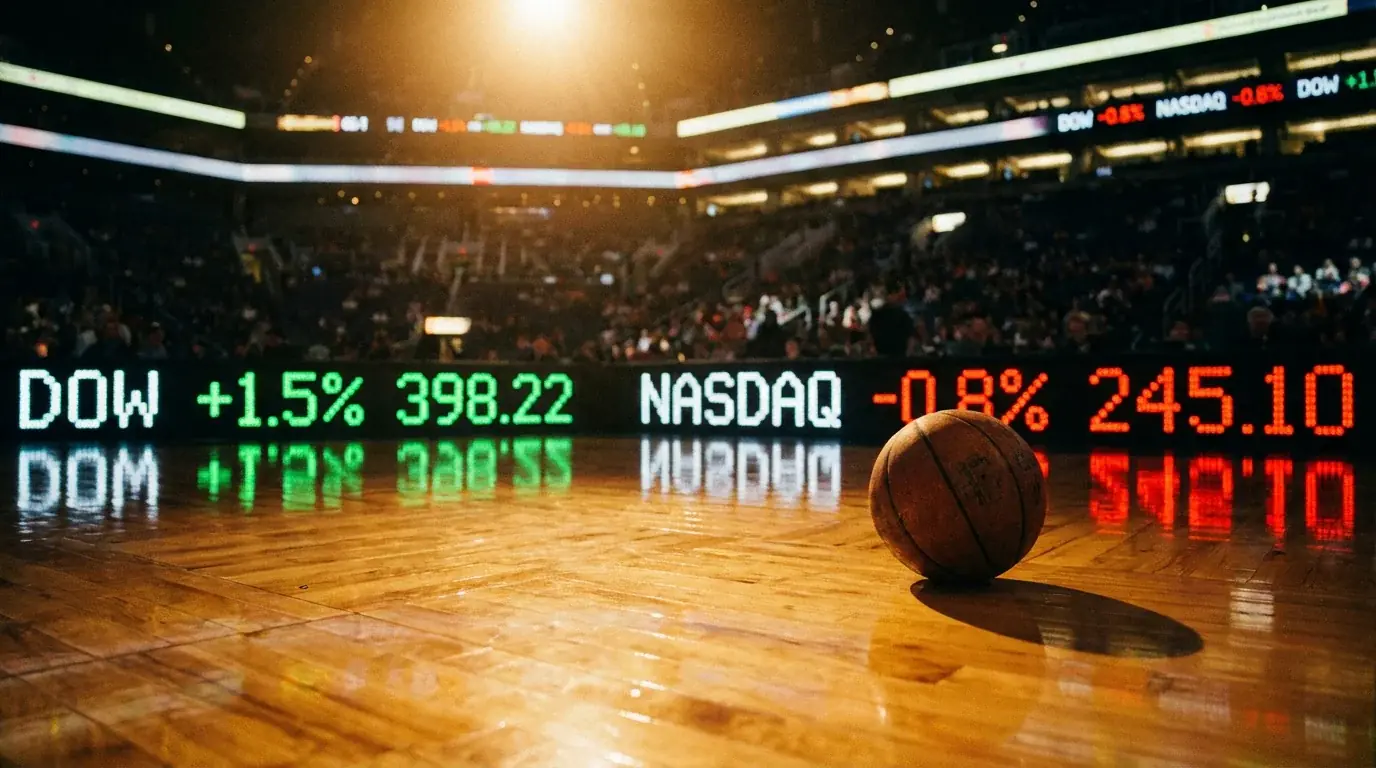
NBA Betting Integrity: What Sportradar’s Data Reveals
 Available in US

The Question Every NBA Bettor Should Ask
You place a spread bet on an NBA game, kick back, and trust that what you’re watching is genuine competition between two teams trying to win. But are they? That’s not paranoia — it’s the most basic due-diligence question any bettor can ask, and the data to answer it now exists in more detail than at any point in basketball history.
Sportradar flagged 233 suspicious basketball matches globally in 2025, placing the sport second only to football in the number of integrity alerts. That number includes leagues at every level — from top-tier professional circuits to lower divisions — but it tells a clear story: basketball’s scoring system, with its high number of possessions and close margins, makes it structurally vulnerable to manipulation. If you’re wagering on the NBA, you should know what the integrity landscape looks like and what, if anything, it means for your bets.
I’ll be upfront: the vast majority of NBA games are clean. More than 99.5% of all sporting events monitored by Sportradar showed no suspicious activity whatsoever. The threat is real but bounded, and understanding its shape helps you bet with clear eyes rather than either naive trust or unfounded cynicism.
233 Suspicious Matches: Basketball in the 2025 Report
Sportradar monitored over one million sporting events across 70 disciplines in 2025 and identified 1,116 suspicious matches globally — a 1% decrease from 2024. Andreas Krannich, Executive Vice President of Sportradar’s Integrity Services, characterised the relative stabilisation as encouraging but cautioned that match-fixing remains an evolving threat requiring sustained investment in technology, intelligence, and collaboration.
Basketball’s 233 alerts broke down along specific market lines that should interest any bettor. Nearly half — 49% — of suspicious basketball activity was linked to totals markets. Another 35% involved spreads. Those are the two most popular NBA bet types, and the concentration of suspicious activity in these markets isn’t coincidental. Totals and spreads can be manipulated without altering the outcome of the game itself — a player can shave points to affect the margin or the combined score without changing who wins. That makes them lower-risk targets for anyone seeking to fix a market.
Sportradar’s system monitored more than 30 billion odds changes across 600+ bookmakers during the year. When odds for a specific game move in a pattern inconsistent with legitimate factors — injury news, lineup changes, weather for outdoor sports — the system flags it for human review. The scale of monitoring is staggering, and it represents a detection capability that simply didn’t exist a decade ago.
For UK bettors specifically, the relevance is twofold. First, the games you bet on through UKGC-licensed bookmakers are subject to this monitoring infrastructure. Second, the market types most vulnerable to manipulation — totals and spreads — are the ones UK NBA bettors use most heavily. Awareness isn’t about avoiding these markets; it’s about understanding the landscape you’re operating in.
How AI Catches Irregular Odds Movement
The technology behind integrity monitoring has advanced faster than most people in the betting world realise. Sportradar’s Universal Fraud Detection System — UFDS — is an AI-driven platform that analyses odds movements in real time across hundreds of bookmakers simultaneously. In 2025, the number of suspicious matches detected by AI increased by 56% year on year, reflecting both improved detection capability and, potentially, a broader sweep of monitored events.
The system works by establishing a baseline of expected odds behaviour for every monitored event. It accounts for all legitimate factors that should move a line — team news, public betting patterns, sharp money — and then flags any movement that deviates significantly from the expected range. A sudden, unexplained shift in the total for a mid-tier basketball game at three bookmakers in Eastern Europe, for example, would trigger an alert even if the major UK and US books haven’t moved.
What makes the AI approach powerful is pattern recognition across time. A single anomalous game might be noise — a whale placing a large bet, a bookmaker correcting a pricing error. But when the system identifies clusters of anomalies linked by common actors, common leagues, or common market types, it can build an intelligence picture that individual bookmakers working in isolation would never detect.
Matthew Wein, a security and sports integrity expert, has pointed out that this is fundamentally a cat-and-mouse dynamic — the detection systems improve, but so do the methods used by those seeking to corrupt sport. The assumption that match-fixers will eventually adopt AI themselves isn’t speculative; it’s the logical next step in an escalating technological arms race.
North America’s Doubling of Suspicious Matches
The most striking regional finding in Sportradar’s 2025 data was North and Central America’s jump to 84 suspicious matches — nearly double the figure from 2024. That increase demands context before drawing conclusions, but it’s impossible to ignore.
Several factors likely contribute. The explosive growth of legal sports betting in the United States — more than $600 billion in total handle processed since the repeal of PASPA in 2018 — has dramatically increased the volume of wagers placed on North American sports. More wagers mean more data points for Sportradar’s system to analyse, which mechanically increases the likelihood of detecting anomalies that might previously have gone unnoticed.
The 2025 NBA gambling scandal, which resulted in 34 arrests and involved both active and former players, also demonstrated that the integrity threat in North American basketball isn’t theoretical. The FBI operation exposed connections between organised crime and sports wagering that had operated for years before detection. Those cases likely contributed to Sportradar’s regional alert count, either directly or through heightened scrutiny of North American basketball markets in the wake of the arrests.
For UK punters, the takeaway isn’t that NBA games are compromised — again, the overwhelming majority are clean. The takeaway is that the integrity infrastructure exists, is improving, and is producing actionable data. The leagues, the regulators, and the monitoring companies are investing billions in keeping the product trustworthy. Your role as a bettor is to be aware of the landscape, to stick with UKGC-licensed bookmakers who participate in integrity monitoring, and to recognise that the data-driven approach to NBA betting includes understanding the data on integrity as well as the data on team performance.
How does Sportradar detect suspicious NBA matches?
Sportradar’s Universal Fraud Detection System analyses odds movements in real time across 600+ bookmakers, comparing actual line behaviour to expected patterns based on legitimate factors like injuries, public betting, and sharp money. When odds move in ways inconsistent with these factors, the system flags the event for human review. AI-driven detection increased flagged matches by 56% in 2025.
Should match-fixing concerns affect how I bet on the NBA?
Not in practical terms for most bettors. Over 99.5% of monitored sporting events show no suspicious activity. The integrity monitoring infrastructure protecting NBA markets is among the most advanced in world sport. Stick with UKGC-licensed bookmakers, focus your analysis on team performance data, and treat integrity awareness as background knowledge rather than a reason to avoid specific markets.
Prepared by the nba Games Betting editorial staff.